

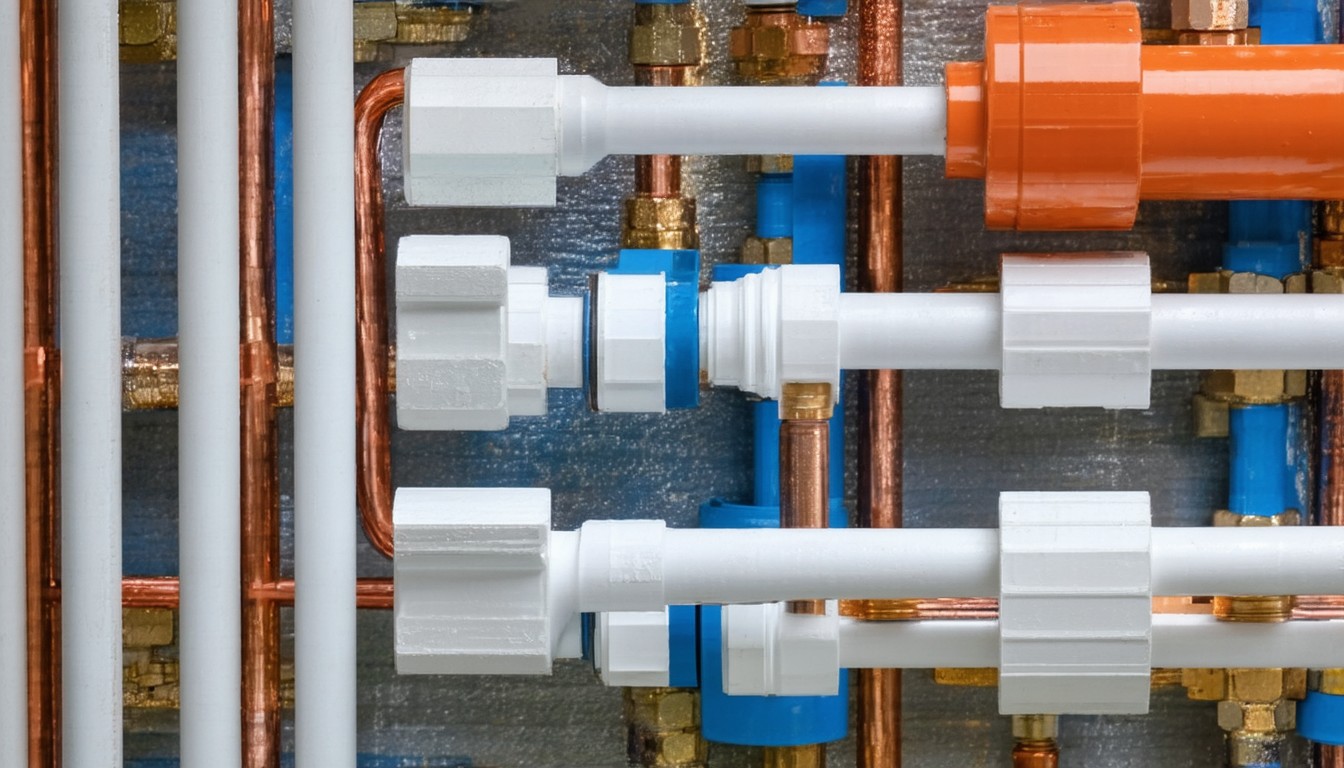
When planning plumbing installations or renovations, the choice between PEX A and PEX B piping is a frequent crossroads for homeowners, contractors, and industry professionals. Both types—under the broader umbrella of cross-linked polyethylene (PEX)—are durable, flexible, and corrosion-resistant alternatives to copper and PVC. Yet, their differences in manufacturing, performance, and ideal use cases can impact long-term reliability and project costs. In North America and beyond, these distinctions have shaped trends in both residential and commercial construction.
The Fundamentals: What Distinguishes PEX A from PEX B?
At a glance, PEX A and PEX B look remarkably similar. Both are variants of cross-linked polyethylene, but the way they are manufactured influences their properties and suitability for different applications.
Manufacturing Processes and Material Science
- PEX A is produced using the Engel, or “peroxide,” method. In this process, cross-linking occurs during extrusion at high temperatures and pressures, allowing the polymer chains to bond more thoroughly. This results in a highly flexible, homogeneous tubing.
- PEX B is manufactured via the “Silane” process (also called moisture cure). The cross-linking takes place as the extruded pipe is exposed to hot water or steam, creating a less uniform but still durable product.
Impacts on Physical Properties
- Flexibility: PEX A’s manufacturing makes it notably more bendable. This feature allows for easier installation, especially around corners and through tight spaces.
- Dimensional Stability: PEX B tends to have a stiffer form, which can make it more challenging to maneuver but contributes to a lower risk of kinking.
Performance Comparison: Key Advantages and Limitations
Performance attributes often drive the choice between PEX A and PEX B for particular projects.
Freeze Resistance and Repairability
PEX A’s flexibility translates into stronger freeze resistance, crucial in colder climates. It can expand and contract with less risk of bursting. Importantly, PEX A is also compatible with the “cold expansion” fitting technique, which is generally considered more secure and less prone to leaks.
On the other hand, PEX B’s stiffer nature makes it slightly more vulnerable to cracking under extreme freeze conditions, though it still outperforms copper or PVC.
“For remodels in challenging environments or retrofit jobs, PEX A’s ability to bounce back from kinks and its cold expansion fittings can be a real saver,” explains Michael Stein, a veteran plumbing contractor with over 25 years of field experience.
Chemical and Chlorine Resistance
PEX B typically offers superior resistance to chlorine degradation, a factor in municipal water systems using high levels of disinfectant. This contributes to a longer nominal life span for PEX B in certain water conditions.
Burst Pressure and Durability
Both PEX A and PEX B meet rigorous ASTM standards, but PEX B often has a marginally higher burst pressure. This can be advantageous in high-pressure systems or commercial scenarios.
Cost Considerations
PEX B generally comes out ahead in terms of cost efficiency. Its manufacturing process is less complex and it is produced in higher volumes, leading to lower per-foot prices. For large-scale plumbing installations where budget is a major consideration, PEX B’s affordability makes it a preferred choice.
Installation Experience: Practical Differences in the Field
Joining Methods and Tooling
- PEX A is compatible with cold expansion (expander) fittings, recognized for low flow restriction and robust, leak-resistant joints. This method requires an expansion tool, often adding upfront tooling cost but providing a high-integrity connection.
- PEX B most commonly uses crimp or clamp (cinch ring) fittings. These are affordable and straightforward for DIYers, though flow may be slightly restricted due to fitting design.
Repair and Retrofitting
A notable practical difference is repairability. If PEX A kinks during installation, it can often be repaired with a heat gun and gentle reshaping—no need to cut out the section. PEX B, once kinked, usually requires a segment replacement.
Learning Curve and Workforce Availability
The ubiquity of PEX B in large housing tracts means a wider labor pool familiar with its installation, reducing labor bottlenecks and training costs for production builders. PEX A’s expander tools, while straightforward, are less commonly encountered on DIY and entry-level jobsites.
Applications and Strategic Use Cases
Residential Plumbing Systems
In single-family homes, both PEX A and PEX B see widespread usage. PEX B’s cost efficiency makes it a default for many production builders. However, in remodel settings—where curves and tight maneuvering are common—PEX A’s flexibility is highly valued.
Radiant Heating and Plumbing Retrofits
PEX A dominates radiant floor heating systems thanks to its easy manipulation and resilience. In historical home retrofits, it’s often the only option that can navigate cramped, existing spaces without extensive demolition.
Commercial Installations
For large, repetitive runs in commercial buildings or multi-family complexes, PEX B’s rigidity can actually help maintain straight lines and reduce installation time. Its higher burst pressure offers peace of mind in high-demand settings.
Environmental Impact and Longevity
Both PEX A and PEX B are designed for longevity—usually rated for 50 years or more under typical conditions. Recent studies suggest there is little difference in environmental impact between the two, as both are recyclable plastics with relatively low VOC emissions compared to older plumbing materials.
However, because PEX A allows for easier repairs and retrofitting, it may contribute to less overall waste over the life cycle of a building.
Cost Comparison: Beyond the Upfront Price
While material cost for PEX B is lower, consider the entire installation lifecycle:
- Tooling and fitting costs
- Waste management during installation (especially if repair is needed)
- Labor time, especially on complex runs
For simple, straight-forward systems, PEX B is usually the economic winner. In complex or labor-intensive projects, PEX A’s properties might reduce hidden costs.
Deciding Factors: How to Choose for Your Project
When choosing between PEX A and PEX B, evaluate:
- Project type and complexity: Remodel, new build, or retrofit?
- Plumbing system design: Are there lots of bends, or long straight runs?
- Budget constraints: Initial outlay vs. long-term maintenance.
- Local water chemistry: High chlorine levels may favor PEX B.
- Installer experience and tooling availability.
Industry experts suggest aligning your choice not just with upfront price, but with the specific challenges and long-term demands of your project.
Conclusion
Both PEX A and PEX B offer robust, modern plumbing solutions—leaving old copper and PVC far behind in performance and convenience. The choice often comes down to flexibility versus affordability, and to matching material strengths with installation context. For remodels and challenging layouts, PEX A shines; for straight-forward, large-scale projects, PEX B is a cost-effective workhorse. Assessing the unique needs and variables of your installation will ensure reliable, efficient results.
FAQs
What are the main differences between PEX A and PEX B?
PEX A is more flexible and can be repaired after kinking, while PEX B is stiffer, generally more resistant to chlorine, and often less expensive.
Is PEX A more expensive than PEX B?
Yes. PEX A usually costs more per foot due to its manufacturing process, while PEX B is the budget-friendly choice for many builders.
Which type is better for DIY installation?
PEX B’s widespread availability and simple crimp/clamp fittings make it user-friendly for DIYers, while PEX A’s expander tool may be less familiar to beginners.
Can PEX pipes be used for both hot and cold water lines?
Absolutely. Both PEX A and PEX B are suitable for hot and cold water supply, as well as radiant heating systems.
Does water quality affect PEX A or PEX B more severely?
Municipal water with high chlorine levels may degrade PEX A more rapidly, while PEX B has better inherent resistance to chlorine.
Which is better for repairs or retrofits?
PEX A is generally preferred for retrofits due to its exceptional flexibility and ability to bounce back from kinks during tricky installations.











Leave a comment