

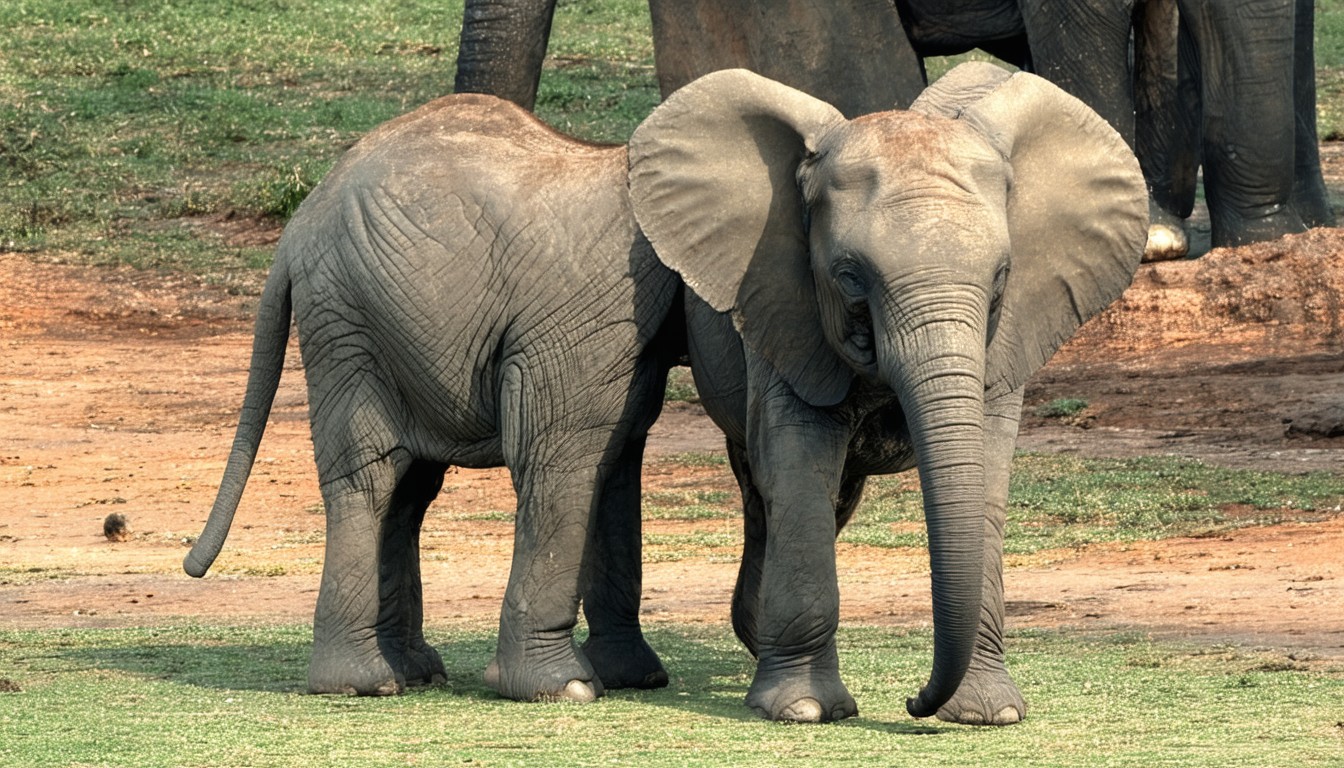
As humans, we often project our emotions onto animals, imagining what they might think or feel about us. When it comes to elephants—a species widely respected for its intelligence and emotional depth—the question “Do elephants think humans are cute?” captures both curiosity and the desire to forge deeper connections. Yet, the science of animal cognition, especially with such complex creatures, is nuanced. Examining how elephants perceive humans requires a closer look at their cognitive abilities, social structures, sensory perceptions, and real-world interactions.
How Elephants Perceive the World
Elephants are renowned for their advanced cognitive abilities, demonstrating memory, empathy, and problem-solving. Their perception of the world is shaped not only by their astonishing intelligence but also by their sophisticated sensory toolkit. Elephants primarily rely on:
- Keen sense of smell and hearing
- Highly developed tactile sensitivity via their trunks
- Sight, though not as dominant as in humans
Their perception is built around social cues, environmental changes, and interspecies communication. This complexity allows elephants to recognize individual humans and even distinguish between different human groups—a phenomenon documented in numerous field studies.
Recognizing Humans: Evidence from the Wild
Research from the Amboseli Trust for Elephants and other conservation organizations has observed that wild elephants can identify specific humans and react differently based on past experiences. For example, Maasai and Kamba people in Kenya are recognized and remembered by elephants—the former historically known for hunting elephants, while the latter are not. Elephants have shown higher vigilance and stress when encountering Maasai men, as opposed to the relative calm observed with Kamba individuals.
This capacity for nuanced distinction is further supported by a 2014 study published in the Proceedings of the National Academy of Sciences. Elephants responded with aggression or caution to garments or voices associated with groups representing a threat, suggesting a remarkable level of perceptual discrimination.
The Concept of “Cuteness” in Human and Animal Eyes
What Does “Cute” Mean to Elephants?
The notion of “cuteness” is rooted in the human psychological response to certain infantile features—large eyes, round faces, small chins—a reaction known as “baby schema” or Kindchenschema. Evolutionary psychologists assert that humans are hardwired to find these features irresistible, an adaptation promoting the care of vulnerable young.
“To ask whether elephants think humans are cute is to first appreciate that their aesthetic judgments, if such exist, are fundamentally different from our own.”
— Dr. Joyce Poole, Elephant Behavior Expert, ElephantVoices
While elephants clearly show affection and strong social bonds within their groups, including nurturing calves that display what humans would call “cute” behaviors, there’s no scientific evidence that elephants perceive human infants—or adult humans—through the same aesthetic lens. For elephants, evaluation of other species likely hinges more on behavioral cues, threat assessment, familiarity, and multi-sensory information than on human-like criteria of attractiveness.
Anthropomorphism and Its Limits
The temptation to anthropomorphize is strong, particularly with charismatic megafauna like elephants. Documented examples of elephants approaching, caressing, or gently investigating humans—especially children—do occur. However, researchers caution against automatically interpreting this as evidence that elephants find us “cute.” Instead, such actions are more accurately explained by curiosity, empathy, or recognition of vulnerability, behaviors deeply ingrained in elephant social life.
Emotional Intelligence and Cross-Species Bonds
Empathy and Altruism in Elephants
Elephants are unique among non-human animals for their ability to express empathy, grieving for lost companions, aiding injured herd members, and sometimes engaging in what appear to be acts of cross-species altruism. In isolated cases, elephants have even been seen helping humans in distress—lifting vehicles or gently assisting lost individuals out of mud.
One compelling Real-world case from India involved an elephant herd rescuing a trapped human child, interpreted by some as empathy-driven behavior. While moving, such instances do not clarify whether elephants sense “cuteness,” but they do confirm the animals’ depth of feeling and capacity for complex social interactions.
Do Elephants Experience Attraction or Aesthetic Preference?
Biologists observe that elephants do recognize and respond to visual and auditory cues in conspecifics (other elephants), especially during mating or when nurturing young. There’s no conclusive evidence they possess an aesthetic preference for creatures of another species. Instead, their positive or negative response to humans appears shaped by learned experiences, emotional memory, and individual personalities.
What Science Suggests About Elephant-Human Relationships
Beyond isolated anecdotes, decades of study at sanctuaries and in the wild underscore that elephants remember specific humans after many years, often reacting with excitement or calm when encountering a familiar, trusted individual. This dynamic is paramount in conservation and rehabilitation contexts.
Similarities between elephants’ reactions to their own young and to human children—such as gentle trunk touches and attentive postures—likely reflect a combination of empathy, curiosity, and sophisticated social awareness. But to date, there is no peer-reviewed research suggesting elephants assign “cuteness” to humans as humans do to animals.
The Value of Not Knowing: Respecting Animal Otherness
A significant portion of animal cognition remains uncharted territory. While elephants display profound intelligence, empathy, and memory, their internal experiences—their likes, dislikes, and emotional responses—may remain forever opaque to us.
Conservationists advocate for humility and caution in interpretation. As Dr. Cynthia Moss, revered elephant researcher, remarks:
“The fact that we cannot fully know the elephant’s mind is not a deficit, but an invitation—to respect, protect, and marvel at a consciousness both like and unlike our own.”
In practice, forming respectful, ethical relationships with elephants—and other wildlife—requires moving beyond our desires for reciprocal affection and instead focusing on understanding their true needs and behaviors.
Conclusion: Insights, Not Answers
There is currently no scientific evidence to suggest that elephants think humans are “cute” in the way we define or experience the concept. Instead, elephants evaluate humans through a multifaceted lens of memory, prior experiences, empathy, and a deep awareness of body language and behavior. While individual elephants may display curiosity, gentleness, or even affection toward trusted humans, these connections are best understood as products of their intelligence and emotional complexity—not as mirror images of human perceptions.
For those fascinated by elephant-human relationships, the most rewarding path is not to seek simple answers but to appreciate the mysteries of an animal mind at once familiar and profoundly different from our own.
FAQs
Do elephants recognize individual humans?
Yes, elephants can recognize individual humans and remember interactions for years, often responding differently based on positive or negative experiences.
Can elephants show affection toward humans?
Many elephants do exhibit signs of affection toward familiar, trusted humans. This is typically expressed through gentle trunk touches, vocalizations, and calm behavior, especially with caregivers or long-term companions.
Have elephants ever saved humans?
There are documented cases where elephants have come to the aid of humans, often when perceiving distress or danger. These acts are interpreted as demonstrations of empathy and intelligence but are rare.
Do elephants like human infants?
While elephants may approach human infants with apparent care or curiosity, there is no scientific proof that they find them “cute.” Their responses likely reflect empathy and inquisitiveness rather than aesthetic appreciation.
How do elephants decide if a human is a friend or threat?
Elephants rely on memory, scent, vocal cues, and observed behaviors to determine whether a human poses a threat or is safe. Groups that have interacted peacefully with elephants often experience calmer, friendlier encounters.
Why is anthropomorphism discouraged in animal studies?
Anthropomorphism can lead to misunderstandings about animal behavior and welfare needs. By assuming animals think or feel exactly like humans, we risk projecting our emotions and overlooking their distinct sensory experiences and communication methods.












Leave a comment